
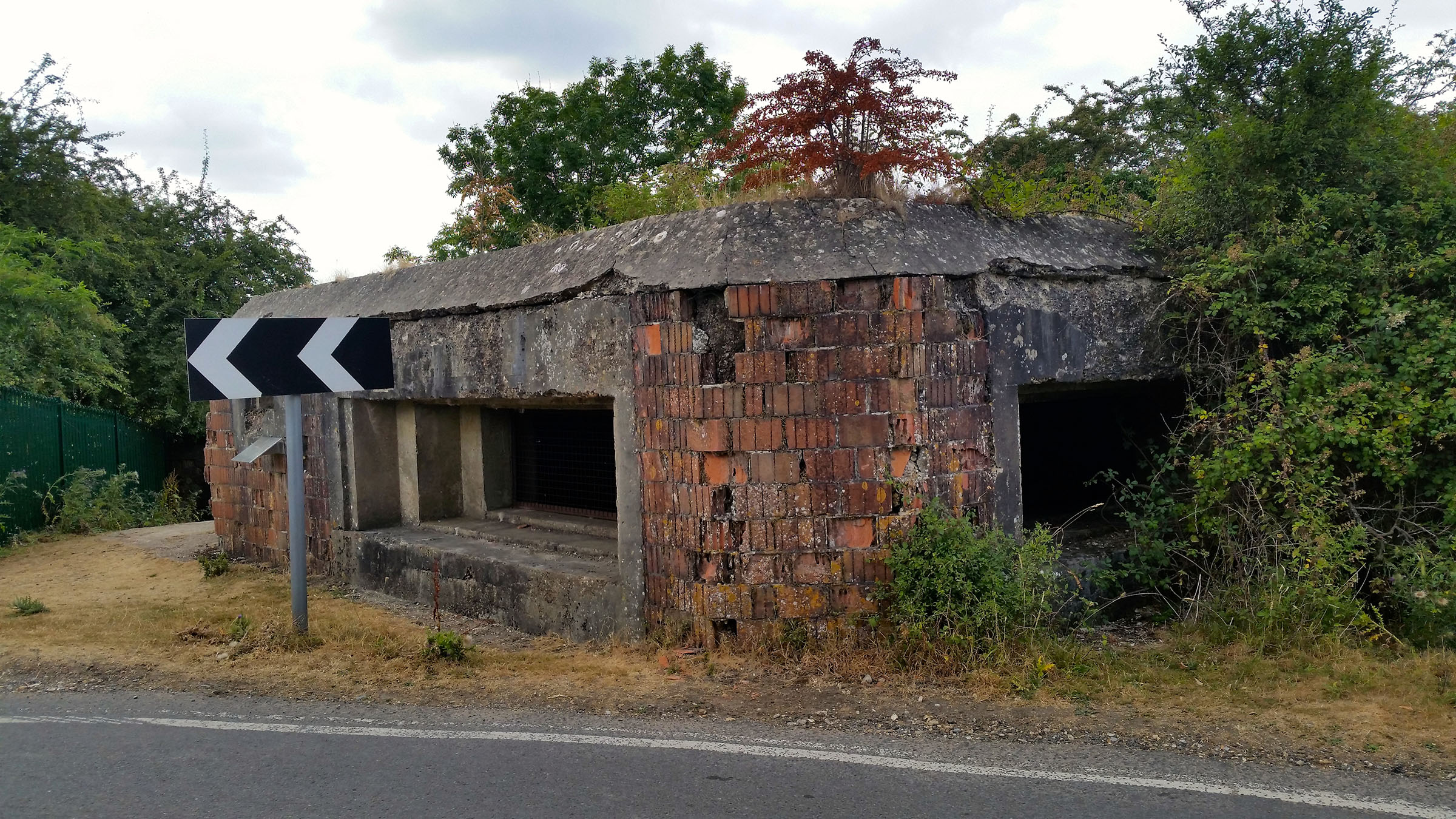
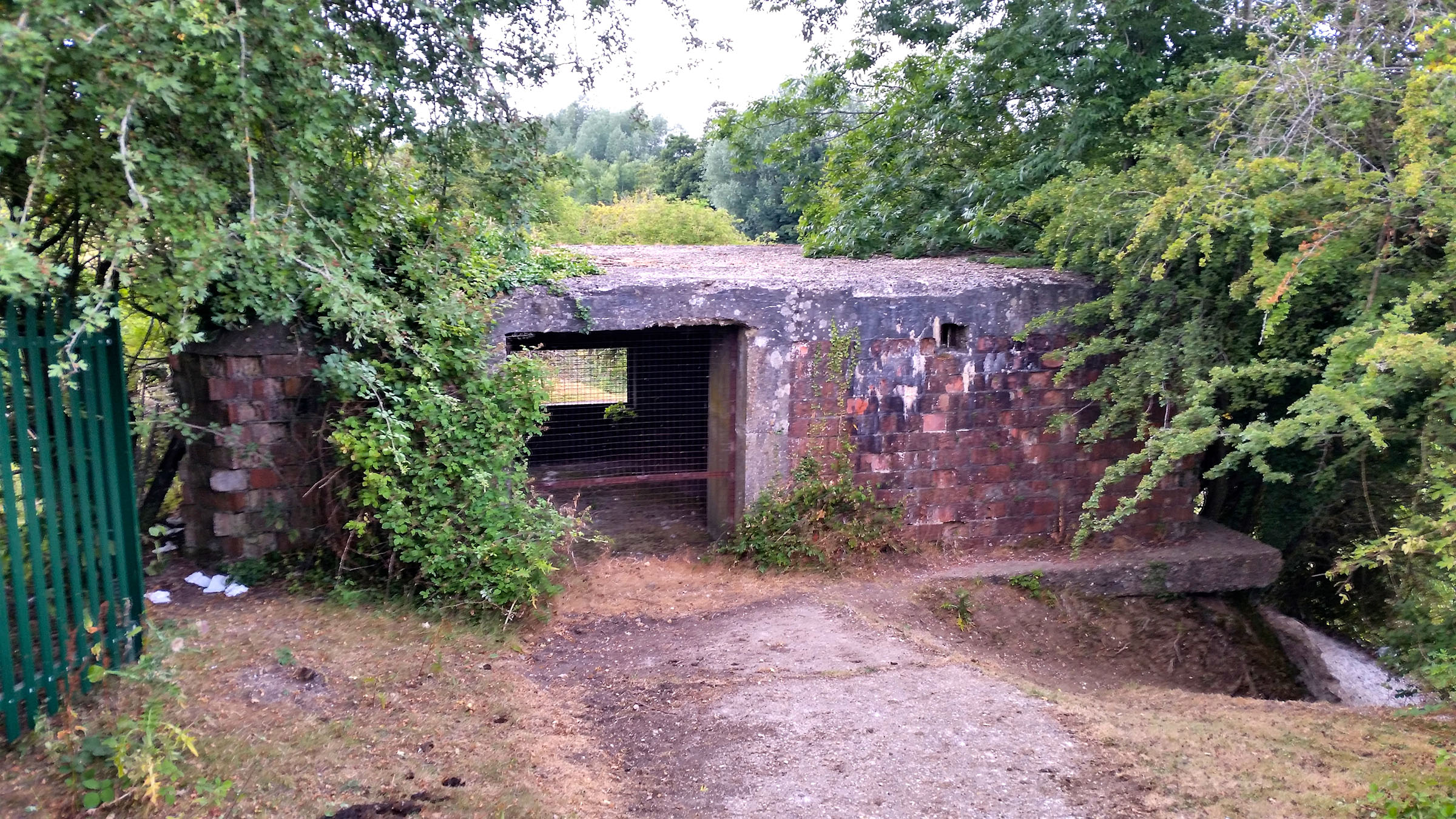
This is a FW3/28A twin pillbox, which has two main gun embrasures on adjacent walls giving two possible firing positions for the one main gun together with two adjacent infantry chambers. These are mainly concentrated in the Sulham valley where attack could have come from both the south and west. A review of the Defence of Britain project in March 2007 suggested there are 19 of the FW3/28A twins still standing.
It should be noted that some recording of the history of these pillboxes has been made with plaques that were fitted exterior to the FW3/28A twin and the FW3/22 in September 2007.
The twin FW3/28A pillboxes are suffering clear decay to some of the brickwork on their outer walls. This is more evident in the higher of the two in the one that can be seen when at the bridge.
Hungerford’s defences were part of the Blue Line or Ironside Line (named after General Sir Edmund Ironside, Commander of Home Forces in 1940) which stretched from Semington in Wiltshire to Theale. The two anti-tank pillboxes were built to house a two pound anti-tank gun which could be moved between them.
The railway bridge also had two other defensive measures which have long since been removed; square concrete road blocks and vertical, rail-plugged sockets on the bridge.
In 1940, the directorate of Fortifications and Works (FW3) was set up at the War Office under the direction of Major-General G. B. O. Taylor. Its purpose was to provide a number of basic but effective pillbox designs that could be constructed by soldiers and local labour at appropriate defensive locations.
The location of these defences is significant in that they covered a rail bridge and a canal and the approaches to both. Rail lines and canals/rivers were common sites for pillboxes as they were seen to be useful as stop lines against an invading force.
Gallery
Location
Open the location with: Google Maps | Bing Maps | OpenStreetMap